
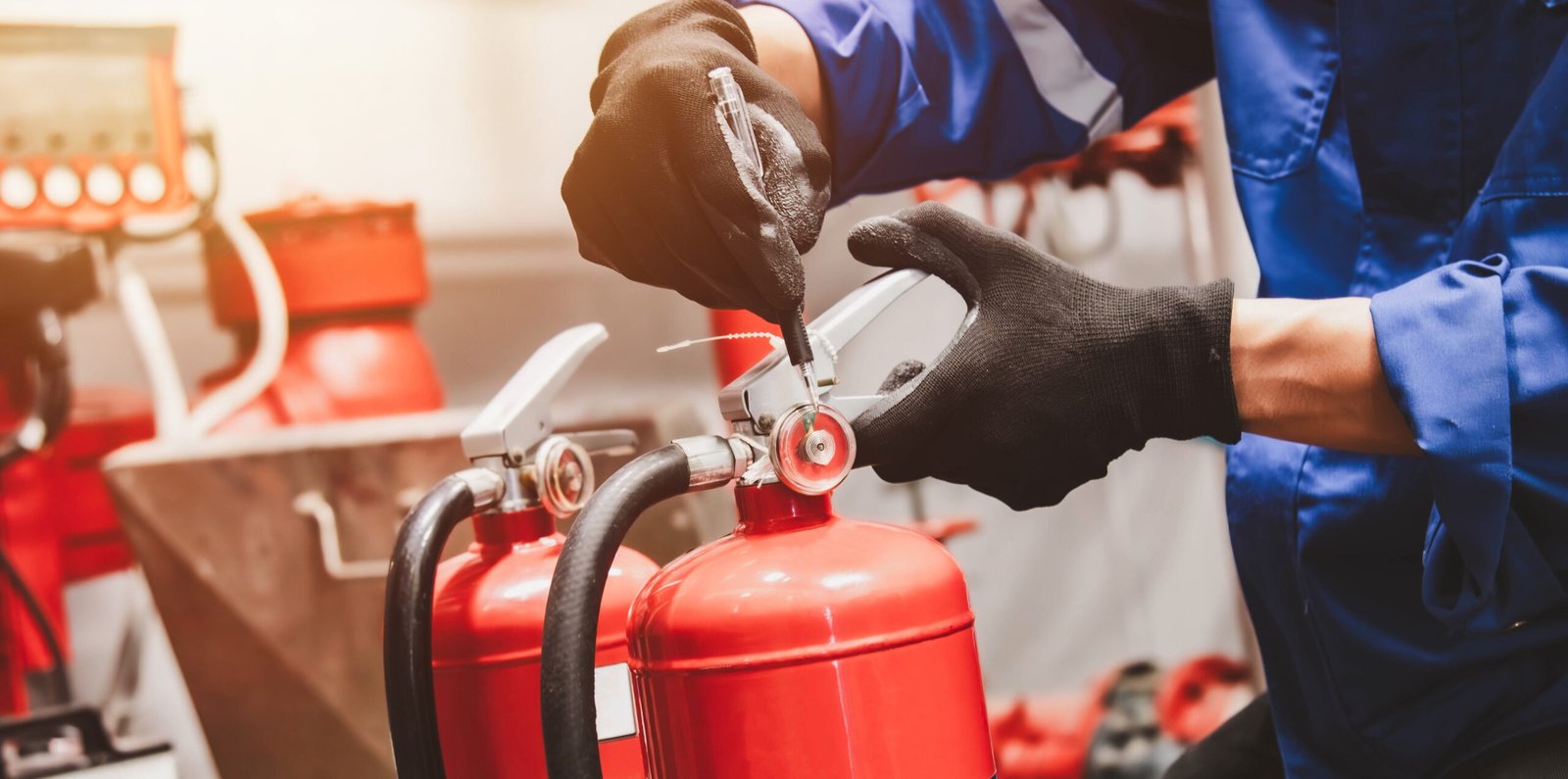
A garage may look like a simple place for parking vehicles or storing household items, but it can contain several potential fire hazards. Cars, motorcycles, electrical equipment, batteries, fuel-related materials, tools, paints, cleaning products, cardboard boxes, and other combustible items can all be present in the same area.
For homes and businesses in Pakistan, garage fire safety should therefore be treated as an important part of the overall fire-safety plan. A clean and organized garage, safe electrical installation, suitable fire protection equipment, clear access, and an effective emergency plan can all help reduce risk.
Pakistan’s Building Code of Pakistan Fire Safety Provisions 2016 includes provisions relating to parking structures, repair garages, motor-fuel facilities, and other building uses. Pakistan Engineering Council (PEC) lists the Fire Safety Provisions 2016 among its published building codes and standards.
This beginner’s guide explains the basic principles of garage fire safety in simple language and shows how garages can be included in a wider fire protection strategy.
Why Garage Fire Safety Matters
Garages can contain a combination of ignition sources and combustible materials.
For example, a garage may have:
- Vehicles
- Electrical outlets
- Battery chargers
- Tools
- Extension cables
- Paints and coatings
- Cleaning products
- Cardboard
- Paper
- Wood
- Household storage
- Machinery
- Fuel-related equipment
- Heating or electrical appliances
The exact hazards depend on how the garage is used.
A private residential garage is different from an automobile repair workshop, commercial parking garage, or industrial maintenance area. Pakistan’s fire-safety provisions distinguish between different types of garages and parking structures, which demonstrates why fire protection should be appropriate to the building’s actual use.
What Makes a Garage Different From Other Rooms?
A garage often has more combustible and mechanical equipment than an ordinary living or office area.
Vehicles can contain combustible materials, while garages may also have electrical equipment and stored products.
Another concern is that garages can become storage spaces over time. Items that are rarely used may accumulate around vehicles, electrical equipment, walls, and exits.
Good housekeeping is therefore one of the simplest ways to improve garage safety.
A garage should not become an uncontrolled storage area.
1. Keep the Garage Clean and Organized
Good housekeeping can help reduce fire hazards.
Avoid allowing unnecessary amounts of:
- Cardboard boxes
- Paper
- Packaging
- Waste
- Old furniture
- Cloth
- Wood scraps
- Other combustible materials
to accumulate in the garage.
Storage should be organized so that emergency equipment, doors, and pathways remain accessible.
Flame Defender’s fire-safety guidance similarly emphasizes keeping fire equipment accessible, maintaining clear escape routes, and addressing combustible waste and other hazards during routine safety checks.
A clean garage is also easier to inspect. Problems such as damaged cables, leaking equipment, blocked exits, or unusual smells are easier to notice when the area is organized.
2. Keep Escape Routes Clear
A garage should never be arranged in a way that makes leaving difficult during an emergency.
Do not allow boxes, tools, furniture, vehicles, or other objects to block doors or designated escape routes.
This is especially important when a garage is attached to a house or forms part of a commercial building.
The Building Code of Pakistan Fire Safety Provisions includes requirements concerning means of egress and life safety.
Everyone using the garage should know which doors can be used to leave the area during an emergency.
3. Pay Attention to Electrical Safety
Electrical faults are an important fire-safety concern in garages.
Garages may contain:
- Lights
- Power tools
- Refrigerators
- Battery chargers
- Garage-door equipment
- Extension equipment
- Vehicle-related electrical devices
- Other appliances
Electrical cables, outlets, switches, and equipment should be kept in good condition.
Warning signs such as burning smells, sparks, damaged cables, discolored outlets, unusual heat, or repeated circuit trips should not be ignored.
Electrical repairs and installations should be handled by appropriately qualified professionals.
A garage is not a suitable place for improvised electrical connections.
4. Avoid Overloading Electrical Outlets
Using too many appliances or high-power devices on a circuit can create excessive electrical demand.
Problems may occur when extension equipment is used as a permanent solution or when multiple high-power devices are connected to an unsuitable circuit.
If a garage regularly needs several high-power electrical devices, the electrical installation should be assessed by a qualified professional.
The objective is to ensure that the electrical system is appropriate for the equipment being used.
5. Store Combustible Materials Carefully
Many garages contain products that can burn.
Examples can include paints, coatings, cleaning products, paper products, packaging, and other household materials.
These products should be stored according to their manufacturer’s instructions and applicable safety requirements.
Avoid placing combustible materials unnecessarily close to:
- Electrical panels
- Heaters
- Engines
- Hot equipment
- Sparks or ignition sources
- Other heat-producing devices
The exact storage requirements depend on the product and the type and quantity of material involved.
Businesses with significant quantities of flammable or combustible materials should obtain professional fire-safety advice rather than relying on household storage practices.
6. Be Careful Around Vehicles
Vehicles introduce additional fire-safety considerations.
A garage should provide enough space for safe movement around vehicles and should not be packed with unnecessary storage.
Vehicle maintenance should be carried out in an appropriate location with suitable safety arrangements.
Commercial repair garages have different risks from private residential garages because repair activities may involve mechanical work, electrical systems, hot surfaces, and other hazards.
Pakistan’s Building Code distinguishes between major and minor repair garages. Major repair garages include activities such as engine overhauls, painting, body work, and repairs involving vehicle fuel systems, while minor repair garages cover activities such as lubrication, inspection, fluid changes, brake repairs, and similar work.
These different activities can require different safety arrangements.
7. Keep Ignition Sources Under Control
A garage should be managed to reduce unnecessary ignition sources.
Potential ignition sources can include:
- Electrical faults
- Hot equipment
- Open flames
- Sparks
- Improperly used heating equipment
- Certain repair activities
The safest approach is to avoid unnecessary ignition sources in areas where combustible materials are present.
Businesses conducting repair or maintenance activities should have specific procedures for controlling fire hazards.
8. Do Not Treat the Garage as a General Storage Room
One common garage problem is gradual accumulation.
An item is placed in the garage temporarily, followed by another item, and eventually there is little free space.
This can create several problems.
First, combustible materials can increase the potential fire load.
Second, stored items may block exits or fire equipment.
Third, clutter can make it harder to identify problems.
Fourth, emergency responders may have more difficulty accessing the area.
A simple storage review every few months can help keep the garage manageable.
9. Install Suitable Smoke or Fire Detection
Early detection can be an important part of garage fire safety.
The appropriate detection arrangement depends on the building, garage type, environmental conditions, and applicable requirements.
Smoke detectors are not automatically suitable for every garage environment. Vehicle exhaust, dust, temperature changes, or other conditions can affect detection equipment.
For commercial and larger buildings, the detection system should be professionally designed according to the property’s fire risks and applicable requirements.
The Building Code of Pakistan Fire Safety Provisions contains requirements for fire detection and alarm systems in specified occupancies.
10. The Role of a Fire Alarm System in Pakistan
A garage should not be considered separately from the rest of the building’s fire protection system.
A suitable fire alarm system in Pakistan can provide early warning when fire conditions are detected.
Depending on the property, a fire alarm system may include:
- Smoke detectors
- Heat detectors
- Manual call points
- Alarm sounders
- Visual notification devices
- Control panels
- Backup power
The exact design should be based on the building’s occupancy, layout, hazards, and applicable requirements.
Flame Defender’s fire-safety guidance notes that a fire alarm system can include detectors, manual call points, alarm notification devices, control panels, and backup power, with inspection and maintenance forming an important part of system readiness.
For a residential garage, the appropriate arrangement may be different from that of a commercial parking facility or automobile workshop.
11. Maintain Fire Extinguishers
Appropriate fire extinguishing equipment can provide an additional layer of protection.
The type and location of extinguishers should be selected according to the potential fire hazards.
Businesses should not simply purchase an extinguisher and forget about it.
Equipment should remain:
- Accessible
- Clearly identifiable
- Appropriate for the hazard
- Properly maintained
- Free from obvious damage
Flame Defender emphasizes that fire equipment should be maintained rather than simply installed and forgotten.
People should also know when evacuation is safer than attempting to use firefighting equipment.
A growing fire, heavy smoke, blocked exit, or rapidly changing situation is a reason to leave the area and seek emergency assistance.
12. Pay Attention to Battery Charging
Modern garages may contain batteries and battery-powered equipment.
Vehicle batteries, tools, backup batteries, and other rechargeable equipment should be charged according to the manufacturer’s instructions.
Charging equipment should be kept in a suitable location with appropriate electrical connections and ventilation.
Do not use visibly damaged charging equipment.
If a battery, charger, cable, or electrical device shows unusual heat, damage, smoke, or another warning sign, stop using it and seek appropriate professional advice.
The specific requirements can vary significantly depending on the type of battery and charging equipment.
13. Keep Garage Doors and Access Points Functional
Garage doors serve more than a convenience function.
A malfunctioning door can make normal access difficult and may complicate emergency evacuation or emergency response.
Doors and access points should be maintained so that they can be operated safely.
If a garage is part of a larger building, its doors and openings may also be relevant to fire separation requirements.
The Building Code contains specific provisions for separation between private garages and dwelling units, including requirements concerning certain doors and fire-resistance ratings.
For this reason, modifications to garage doors or walls should be professionally reviewed when they affect a fire-rated separation.
14. Attached Garages Need Extra Attention
An attached garage can create additional fire-safety considerations because it shares a building with living or occupied areas.
The Building Code of Pakistan 2021 includes provisions for separation between private garages and dwelling units, including requirements concerning fire-rated construction and certain door assemblies.
Homeowners should therefore avoid making unplanned structural changes between an attached garage and the rest of the house.
For example, replacing a properly rated separation with an unsuitable door or altering walls without considering fire protection can change the safety characteristics of the building.
Major modifications should be discussed with an appropriately qualified professional.
15. Keep Heating Equipment Safe
Some garages may contain heaters or other equipment that produces heat.
Such equipment should be used according to manufacturer instructions and kept away from combustible materials.
Do not place cardboard, cloth, paper, chemicals, or other combustible items directly beside heat-producing equipment.
Temporary heating arrangements should not be improvised.
If a garage becomes unusually cold and heating is required, the safest approach is to use equipment suitable for the environment and have the installation assessed when necessary.
16. Garage Ventilation Matters
Garages can contain vehicle exhaust and other airborne pollutants.
A closed garage can allow exhaust gases to accumulate.
If a vehicle is operating inside a garage, appropriate ventilation and safety procedures become especially important.
A fuel-burning engine should not be treated as harmless simply because a garage door is partly open.
The exact ventilation requirements depend on the type of garage and its use.
Commercial parking and repair facilities should be designed according to applicable building, mechanical, fire, and occupational safety requirements.
17. Create a Garage Emergency Plan
A fire-safety plan does not need to be complicated.
For a home garage, family members should know:
- How to recognize a fire alarm
- Which exits can be used
- Where to assemble outside
- How to contact emergency services
- That they should not return to a burning building
For a business garage, the plan may additionally cover:
- Employee responsibilities
- Alarm activation
- Evacuation routes
- Assembly areas
- Fire equipment locations
- Emergency communication
- Vehicle movement procedures
- Assistance for people who need additional support
Flame Defender’s fire-safety checklist recommends reviewing alarms, firefighting equipment, emergency exits, evacuation arrangements, assembly points, and staff awareness as part of routine preparedness.
18. Train People Who Use the Garage
Safety equipment is most useful when people understand its purpose.
Employees working in garages, workshops, or parking facilities should receive suitable fire-safety training.
Training can cover:
- Recognizing fire hazards
- Reporting electrical problems
- Keeping escape routes clear
- Understanding the fire alarm
- Locating fire extinguishers
- Following evacuation procedures
- Knowing when not to attempt firefighting
- Reporting damaged equipment
Training should match the person’s role.
Someone responsible for vehicle repair requires different technical training from an office employee who occasionally enters a parking garage.
19. Inspect the Garage Regularly
Regular inspections help identify problems before they become emergencies.
A basic garage inspection can ask:
- Are exits clear?
- Are electrical cables undamaged?
- Are outlets free from visible damage?
- Is combustible waste removed?
- Are fire extinguishers accessible?
- Are alarms or detectors unobstructed?
- Is emergency lighting functioning where required?
- Are storage areas organized?
- Are heating devices safely positioned?
- Are garage doors operating properly?
- Are maintenance issues recorded?
- Are employees aware of emergency procedures?
A checklist is useful, but it does not replace technical inspection or a professional fire-risk assessment.
Common Garage Fire-Safety Mistakes
Using the Garage as a Storage Dump
Excessive storage can increase combustible materials and block access.
Ignoring Electrical Warning Signs
Burning smells, sparks, damaged cables, and repeated breaker trips should be investigated.
Blocking Fire Equipment
An extinguisher or alarm that cannot be reached quickly is less useful during an emergency.
Blocking Doors
Boxes and equipment should not prevent people from leaving.
Making Unplanned Structural Changes
Changes between a garage and an occupied part of a building can affect fire separation.
Ignoring Maintenance
Fire alarms, extinguishers, electrical systems, doors, and other equipment require appropriate maintenance.
Assuming One Safety Device Is Enough
No single device can provide complete fire protection.
Garage Fire Safety Checklist
Use this simple checklist as a starting point:
- Keep the garage clean and organized.
- Remove unnecessary combustible waste.
- Keep exits and doors clear.
- Inspect electrical cables and outlets.
- Investigate repeated circuit breaker trips.
- Keep combustible materials away from heat sources.
- Store products according to their instructions.
- Maintain suitable fire extinguishers.
- Keep fire equipment accessible.
- Maintain appropriate detection and alarm systems.
- Check emergency lighting where applicable.
- Keep garage doors and access points functional.
- Review battery-charging arrangements.
- Maintain heating equipment.
- Train employees or household members.
- Keep emergency contact information available.
- Review the fire-safety plan regularly.
Fire Safety for Commercial Garages and Workshops
Commercial garages require additional consideration because employees may perform maintenance and repair activities.
Activities such as vehicle repair, painting, welding, mechanical work, and handling automotive fluids can introduce hazards that do not normally exist in a private garage.
The Building Code’s definitions distinguish major and minor repair garages based on the activities performed.
A commercial garage should therefore receive a fire-safety assessment based on its actual operations.
The assessment may consider:
- Building construction
- Vehicle numbers
- Repair activities
- Storage
- Electrical equipment
- Fuel-related hazards
- Fire detection
- Fire extinguishers
- Emergency exits
- Ventilation
- Employee training
- Emergency procedures
The more complex the operation, the more important professional fire-safety planning becomes.
Final Thoughts
Garage fire safety begins with simple habits: keep the area organized, control electrical hazards, store materials appropriately, maintain fire equipment, keep exits clear, and make sure people know what to do during an emergency.
For homes, an attached garage deserves particular attention because it can be directly connected to occupied rooms. For businesses, repair garages and parking facilities may have additional hazards and more complex fire-protection requirements.
Pakistan’s Building Code of Pakistan Fire Safety Provisions 2016 provides a framework covering fire prevention, life safety, and fire protection, while the exact requirements for a property depend on its use, design, location, and applicable authorities.
A suitable fire alarm system in Pakistan can form an important part of the wider strategy by providing early warning. However, an alarm should work alongside safe electrical systems, appropriate extinguishing equipment, clear escape routes, good housekeeping, training, and regular maintenance.
For businesses and property owners reviewing their fire protection arrangements, Flame Defender provides fire-safety information and services for properties in Pakistan.
The most important principle is simple: a safe garage is an organized garage with proper fire protection and a clear emergency plan.
Frequently Asked Questions
1. What are the most common garage fire hazards?
Common hazards can include electrical faults, combustible storage, heating equipment, vehicle-related materials, damaged cables, battery charging equipment, and poor housekeeping. The specific risks depend on how the garage is used.
2. Should every garage have a fire alarm?
The appropriate detection arrangement depends on the building, occupancy, garage type, layout, and applicable requirements. Commercial and larger facilities may have more comprehensive fire detection and alarm requirements than a private garage.
3. Can a garage be used for storage?
A garage can contain storage, but excessive or inappropriate storage can increase fire risk and block exits or equipment. Materials should be stored safely and according to their characteristics and manufacturer’s instructions.
4. Why is an attached garage a special fire-safety concern?
An attached garage shares a building with occupied areas. The Building Code includes provisions for separating private garages from dwelling units, including requirements for certain walls, ceilings, ducts, and doors.
5. What is the most important garage fire-safety rule?
There is no single rule that covers every situation. A strong approach combines prevention, safe electrical systems, suitable fire protection, clear escape routes, early warning, good housekeeping, maintenance, and emergency training.